WP1
Project and Quality Management
Ensures coordination, communication, promotion, finance, risk management, and constant evaluation of the results and activities across all consortium partners.
About VITA
VITA helps vocational schools rethink their digital strategies by combining artificial intelligence tools with learner-centred pedagogies and real labour-market insights.
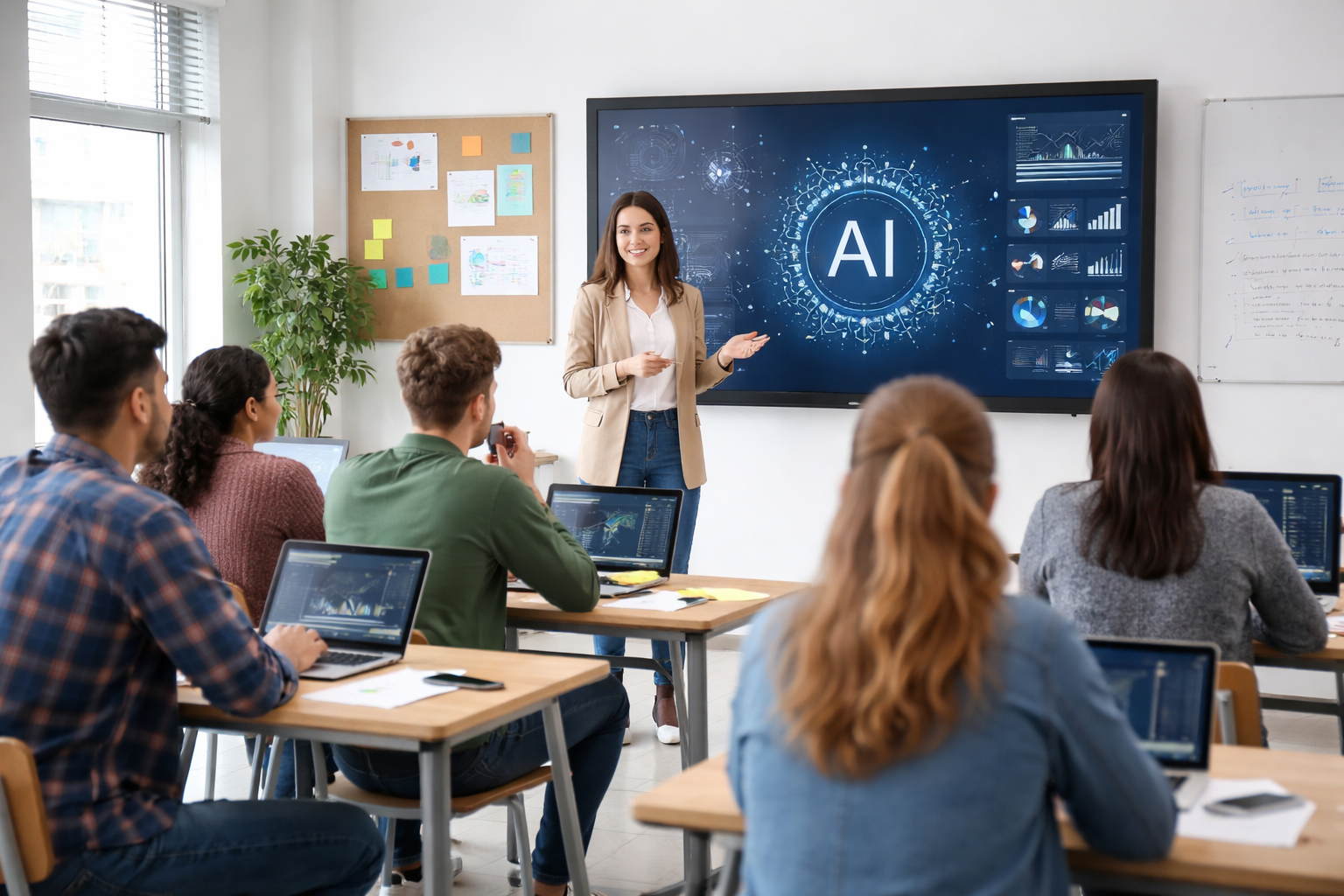
The digital transformation of education is a broad and comprehensive process that impacts organizational culture and all aspects of the learning and teaching process. In vocational education, this process has begun in recent years. However, the rise of artificial intelligence (AI) is forcing VET schools to rethink their digital strategies and consider how to incorporate the opportunities offered by AI. Digital literacy can no longer be understood without artificial intelligence skills, and teachers need to be prepared for this. .
VITA responds by equipping teachers with practical AI know-how, combining microlearning resources, blended professional development, and school-wide engagement so that AI-enhanced lessons become part of everyday practice across subjects.
Ensures coordination, communication, promotion, finance, risk management, and constant evaluation of the results and activities across all consortium partners.
Mapping the digital readiness of partner schools and identifying the level of AI penetration in companies through SELFIE surveys by the tutors and workshops with companies operating in the school's field of expertise, focusing on one selected profession per school. Designing a curriculum and developing learning content of 5 modules based on the result and establishing the IT background for the online e-learning course titled "AI-Powered Teaching for VET".
Pilot testing by teachers at the partner schools is delivered to ensure that the main result, the "AI-powered teaching" course, is relevant to the target group and represents good quality in content and in methods as well. The objective of the pilot is to provide feedback about the resources developed and the methodology used in the online course. At the end of the pilot, teachers provide their own AI-based lesson plans and be given micro-credentials.
Practical implementation of the AI-powered lesson plans created by the teachers during the pilot. Their self-reflections, case stories as well as students' feedback serve as an important input to the open-source handbook that collects best practices, case studies, and methodologies demonstrating AI-powered teaching in VET. It provides a three-steps scalable model and inspiration for educators across Europe.
The model inspires collaborative learning, innovation, and professional growth within VET schools. Through critical discussion and reflection, teachers and students will learn to evaluate AI applications responsibly, ensuring that technological innovation supports democratic participation in line with the fundamental values of the European Union.
Engagement of all teaching staff in workshops introducing the fundamentals of AI and its relevance for VET education.
In-depth learning by doing.
Teachers implement their AI-enhanced lessons or projects with students.